
Precautions for Operating Drilling Rig Equipment at Depths of 600 to 1000 Meters
2026-08-17
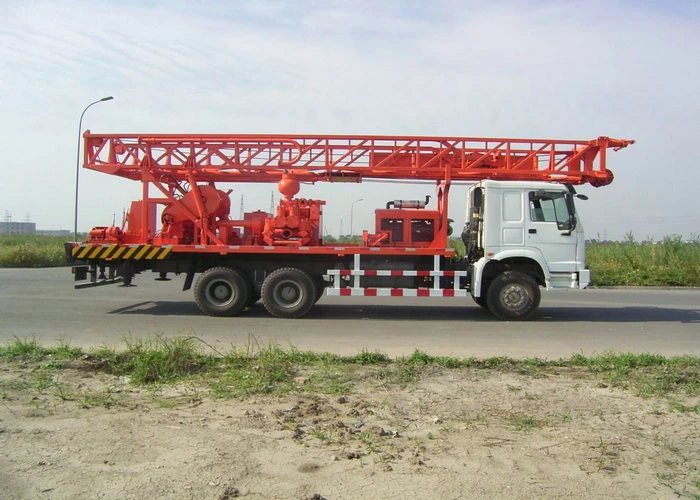
Introduction
Drilling operations at depths between 600 and 1000 meters present unique engineering and safety challenges. At this range, increased hydrostatic pressure, formation instability, and mechanical stress on equipment elevate the risk of blowouts, stuck pipes, and tool failures. This article outlines critical precautions for rig operators, engineers, and site supervisors to ensure safe, efficient drilling in this demanding depth window.
1. Pre-Operation Equipment Inspection and Certification
Before commencing any drilling activity, all rig components must undergo a comprehensive inspection. Key items include:
- Derrick and mast integrity: Check for fatigue cracks, corrosion, and bolt torque. At 600–1000m, the hook load can reach 150–250 tons, so structural certification (e.g., API 4F) must be current.
- Drawworks and braking system: Test the auxiliary brake (e.g., Eddy current or hydraulic) for smooth engagement under simulated load. Any lag in braking response can cause uncontrolled descent of the drill string.
- Mud pumps and circulation system: Verify pressure ratings (typically 3,000–5,000 psi) and seal integrity. A sudden loss of circulation at these depths can lead to formation collapse.
- BOP (Blowout Preventer): Function-test all rams and annular preventers to their rated working pressure. At 600–1000m, pore pressure gradients often exceed 0.8 psi/ft, making kick detection critical.
2. Drill String Design and Torque Management
At 600–1000 meters, the drill string weight and torsional stress increase significantly. Precautions include:
- Use of heavyweight drill pipe (HWDP): Transition zones between drill pipe and drill collars must be designed to avoid fatigue concentration. Inspect tool joints for galling or cracking.
- Torque and drag monitoring: Install real-time sensors on the top drive or rotary table. Set alarm thresholds at 80% of the maximum allowable torque (usually 40,000–60,000 ft-lb). Sudden torque spikes indicate hole instability or key seating.
- Stick-slip mitigation: At these depths, stick-slip vibrations can damage downhole tools. Use anti-stall tools or adjust RPM and WOB (weight on bit) based on downhole vibration data.
3. Mud Program and Wellbore Stability
The mud system must be carefully engineered for the formation pressures at 600–1000m:
- Mud weight control: Maintain mud weight within ±0.1 ppg of the planned window. Overweight mud can fracture the formation; underweight mud can cause influx.
- Rheology and filtration: Ensure low-solids, high-yield mud with proper fluid loss control (<5 ml/30min API). At these depths, shale hydration can cause bit balling or wellbore washouts.
- Real-time pit gain/loss monitoring: Use a precise flowmeter and trip tank. A pit gain of >1 barrel per 30 seconds requires immediate shut-in and BOP activation.
- Gas detection: Install multi-point gas sensors (C1–C5) on the shale shaker and degasser. Early detection of gas shows can prevent a blowout.
4. Tripping Operations and Pipe Handling
Tripping in and out of the hole at 600–1000m demands special care:
- Fill-up and displacement checks: Always monitor the trip tank. If the hole does not fill to the calculated volume, it indicates fluid loss or swabbing; if it overfills, it indicates influx.
- Controlled tripping speed: Limit tripping speed to 0.5–0.7 m/s to avoid pressure surges that can fracture weak formations. Use a trip sheet to track time vs. depth.
- Pipe inspection: Each stand must be visually inspected for corrosion pits, stress cracks, or wear on the pipe body and threads. At these depths, a single failed joint can result in a costly fishing job.
5. Emergency Response and Contingency Planning
Even with all precautions, emergencies can occur. Preparedness includes:
- Kill sheet preparation: Pre-calculate kill mud weight, pressure, and volume for the anticipated worst-case kick. Post the sheet at the driller’s console.
- BOP drill frequency: Conduct weekly BOP function tests and monthly blowout drills. At 600–1000m, the response time from kick detection to shut-in should be under 2 minutes.
- Emergency shutdown (ESD) system: Verify that the ESD can automatically close the BOP and shut down the drawworks if hydraulic pressure drops below 1,500 psi.
- Communication protocol: Establish a clear chain of command between the driller, mud logger, and rig manager. Use standardized terminology (e.g., "kick," "lost circulation") to avoid ambiguity.
6. Environmental and Human Factors
Depth itself is not the only risk; environmental and human factors compound the danger:
- Temperature and pressure effects: At 1000m, bottom-hole temperature can reach 60–80°C, affecting mud additives and electronic sensors. Use high-temperature-rated tools and coolers for electronics.
- Fatigue management: Extended shifts at this depth require strict adherence to 12-hour maximum work limits with rest periods. Fatigue is a leading cause of misreading gauges or skipping safety steps.
- Training and competency: All crew members must have certified training in well control (IWCF or API RP 59) and specific drills for deep-hole operations. Simulate stuck pipe and lost circulation scenarios monthly.
Summary
Operating drilling rigs at 600–1000 meters requires a systematic approach to equipment integrity, mud management, tripping procedures, and emergency readiness. Key takeaways: (1) perform rigorous pre-shift inspections, (2) maintain real-time monitoring of torque, pit volume, and gas levels, (3) strictly control mud weight and tripping speed, and (4) rehearse emergency responses regularly. By adhering to these precautions, operators can minimize downtime, protect personnel, and ensure safe penetration of this challenging depth interval.